
The Aardvark, also called Antbear is a fascinating and unique African mammal that can be found south of the Sahara Desert in savanna and semiarid areas. It is known for its distinctive appearance and intriguing habits.
The aardvark, scientifically known as Orycteropus afer, is a nocturnal mammal that resembles a curious mix of different animals. Its name, "aardvark," comes from the Afrikaans language, meaning "earth pig." This is because it has a stout body with a long, tubular snout, which makes it look somewhat like a pig. However, aardvarks are not pigs; they belong to a unique group of animals known as aardvarks or Orycteropodidae.
One of the most distinctive features of the aardvark is its long, sticky tongue, which it uses to slurp up ants and termites from their underground nests. Aardvarks are excellent diggers, and their strong claws help them excavate these insect delicacies. They are solitary creatures and are not often seen by humans due to their nocturnal lifestyle. Despite their relatively unknown status, aardvarks play a crucial role in their ecosystems by helping control insect populations. So, let's dive deeper into the world of this intriguing earth pig and discover more about its diet, habits, habitat, behaviour, and importance.
Aardvark
Orycteropus Afer
3.4 - 7.2 ft
110 - 180 lbs
20 - 23 yrs
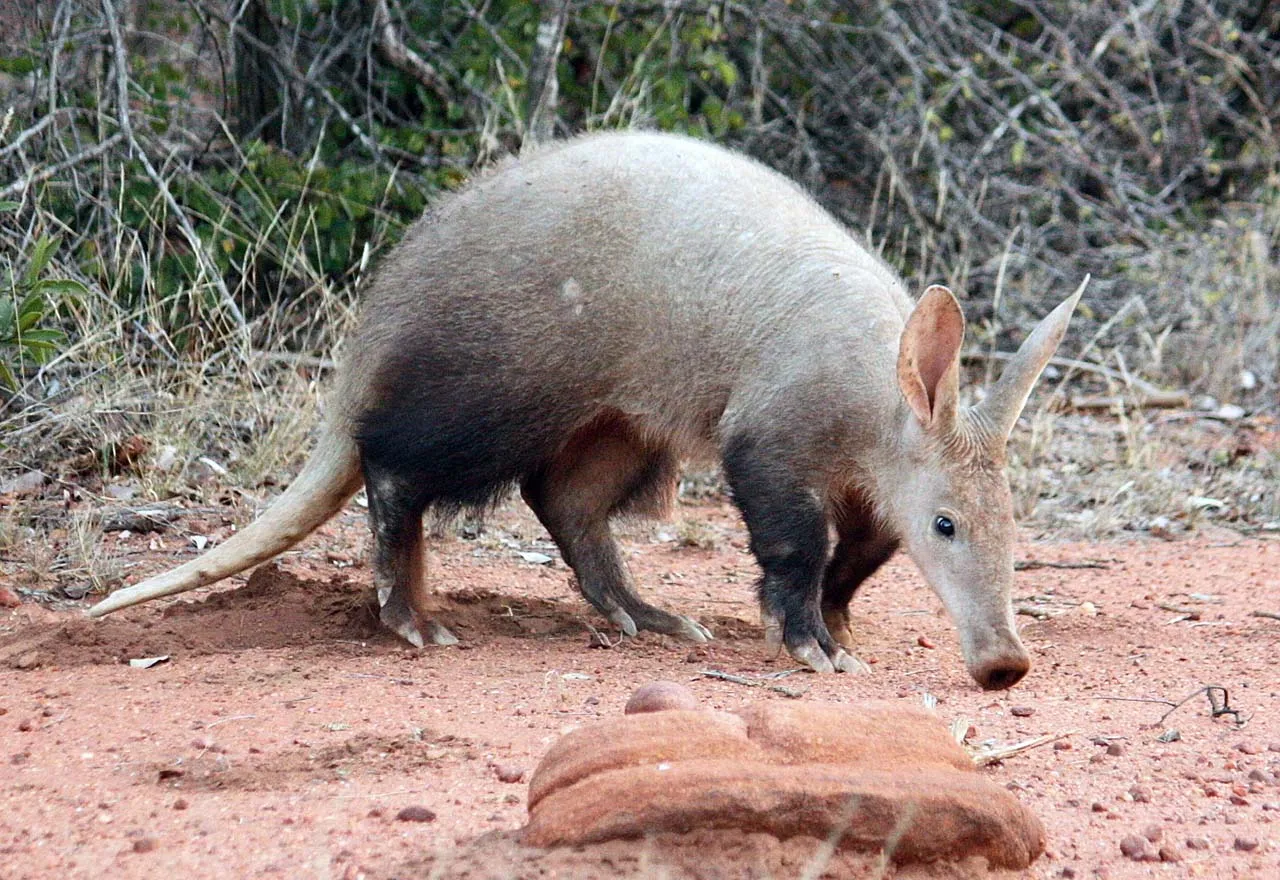
The aardvark is a medium-sized, burrowing, nocturnal mammal native to Africa. It is the only living species of the order Tubulidentata, although other prehistoric species and genera of Tubulidentata are known. Their scientific name is Orycteropus Afer. The name "aardvark" is Afrikaan, comes from earlier Afrikaans aardvark and means "earth pig" or "ground pig".
Aardvarks are fascinating Creatures of the African Plains. These nocturnal mammals possess a range of intriguing features that set them apart from other animals. There are some interesting and incredible facts about Aardvarks:
Aardvark’s distinctive appearance is hard to miss. They have a stout body and pinkish-grey, greyish-brown or black skin covered with a coat of woolly fur. The aardvark has a long neck, a narrow face, an elongated pig-like snout, very reduced eyes, sturdy legs, a long thin-snakelike protruding tongue (as much as 30 centimetres or 12 inches long), thick skin that's impervious to insect bites, strong claws, a long bushy tail and elaborate structures supporting a keen sense of smell. The very effective rabbit-like large ears perched on top of their head disperse heat and long up to about 20 - 25 centimetres (7.9 - 9.8 in).
Their large eyes with retinas contain only cones. Their nostrils close up when the aardvark burrows, protecting them from dust, dirt and attacks by ants or termites. The aardvark weighs up to 65 kg (145 pounds) and measures up to 2.2 meters (7.2 feet) long, including the heavy, 70-cm (28-inch) tail. Aardvark’s powerful claws for digging into ground or termite nests and they have keen hearing power.
Aardvarks are found in sub-Saharan Africa, where they can find suitable habitats such as savannas, grasslands, woodlands and bushland, as well as food such as ants and termites are also. They are in many different types of habitats, such as rainforests and thickets throughout Africa in the areas south of the Sahara. Aardvark digs their burrows but sometimes uses abandoned Waterhog or Antelope holes. They spend the daylight hours in dark burrows to avoid the heat of the day. Their tunnels can be over thirty feet long and have two or more entrances.
The Aardvark is distributed across most of central and southern Africa (except for the Namib desert, Ivory Coast, Ghana and Madagascar), Occurring south of the Shara Desert, from Senegal to Ethiopia and South Africa. They tend to avoid rocky terrain because rocks are difficult to dig in, according to the International Union for Conservation of Nature (IUCN).
Due to their pig-like long snout, they are called “Earth Pigs” and for their food habits they are also called “Ant Bear”. Their primary diet consists of ants and termites but also eat beetles, insect larvae and other small animals and can eat plants with their long sticky tongue. Aardvark’s tongue grew up to 30 cm in length. With termites being their preferred food source. They get moisture from their prey naturally that's why they drink very little water. They can eat 50,000 to 60,000 ants and termites in one night.
Aardvarks, also known as "earth pigs," are unique creatures native to the African plains. They are shy but terrestrial, solitary, nocturnal and curious animals. They are known to be good climbers. They spend their days sleeping in underground burrows to protect themselves from the heat of the African Sun. During the night they spend their time working on their burrows or finding food.
They are good swimmers and they can run 26 to 28 miles an hour. Aardvarks are most active at night and tend to live alone.
Aardvarks live along and travel many miles to hunt and find water. They are mostly solitary mammals and only come together for mating and are never found in large groups. They live in underground burrows to protect them both from the hot daytime sun and predators. Even though they are nocturnal, they sometimes come out during the day to sun themselves. Since their eyesight is limited, the aardvark is always cautious when leaving their burrow to forage for termites. Aardvark is endemic to Africa.
Aardvarks are polygynous, which means that one male mates with many females. Aardvarks reproduce sexually and form pairs only for a short time during the breeding season. Depending on the region in Northern Africa the Aardvark give birth from October to November and in the South from May to July. Known to have babies most years, female Aardvarks give birth to a single offspring or rarely two after a gestation period that usually lasts for around 7 months.
Aardvarks are born frail, hairless and wrinkled. Their babies are called calves or cubs. A baby aardvark stays in the burrow for two weeks and then begins to venture out to forage at night with its mom. Young Aardvarks live with their mother in her burrow until they are around six months old when they move out to dig a burrow of their meals and they grow to full size in about one year.
Aardvarks live for up to 20 years in the wild and in captivity, Aardvarks are expected to live for about 23 years. Longevity is at least 24 - 29 years in zoos. At birth baby, Aardvarks weigh about 2 pounds. They are sweet with bare pinkish wrinkly skin.
Aardvarks are hunted by humans. Other animals, like lions, hyenas, cheetahs, leopards, hunting dogs and large snakes like pythons are its natural predators in the wild. Their enemies who hunt them also destroy their natural habitats. They defend themselves to escape very quickly underground. The aardvark's fast digging skill also helps protect it from predators. When threatened, an aardvark can dig a hole and cover itself up in about ten minutes. Its large claws are another layer of defence. However, they are facing several threats to their survival, including habitat loss and fragmentation due to agricultural expansion and deforestation, hunting for their skins and meat and collisions with vehicles.
The International Union for the Conversation of Species considers the Aardvark a species of “Least Concern”, meaning their populations are stable but they could face trouble in the future as their habitat is destroyed. Their population size of around 20,000-100,000 individuals. They are quiet animals and people rarely see them, so many people don't know that they exist. However, they remain common throughout much of their range and can be seen in zoos around the world.
According to IUCN, the aardvark is relatively common and widely distributed but no overall population estimate is available. This is although the total population of aardvarks are not known and the population seems to be decreasing in many areas of Africa due to population growth and hunting. Owing mainly to their nocturnal habits, little is known about the Aardvark population status, but they are not endangered. The population of Aardvarks is growing at a rate of 4% per year.
Aardvarks have an important function as 'ecosystem engineers'. They are a vital part of the ecosystem as they are prey for many species and their old burrows provide homes for other animals, such as African Wild Dogs. No other animal in Africa creates as many large underground burrows as the aardvark. When abandoned, these large burrows provide important shelter to many other animals, for raising their young and protecting them from temperature extremes and predators.
Aardvark has become a beloved resident of zoos around the world. They are not a common sight in zoos but their arrival at the local zoo has caused quite a stir among visitors and staff alike.
The new addition to the zoo's animal family has quickly become a favourite attraction for visitors of all ages. Many have never seen an aardvark up close before and are fascinated by its unusual appearance. These nocturnal creatures spend most of their time underground, so observing their behaviour during daylight hours is an extraordinary opportunity. Visitors can now learn about the Aardvark's diet and hunting techniques through educational displays set up near the enclosure.
Winsol is the first healthy aardvark born at the zoo since 1994. There aren't many aardvarks in captivity in the United States, about 37 in 19 zoos - 16 males and 21 females, according to Dulaney. The San Diego Zoo has announced the birth of an aardvark cub—the first to be born at the Zoo in more than 35 years. The female cub, yet to be named, was born May 10 to first-time aardvark parents, mother Zola and father Azaan.
The aardvark belongs to a special group of animals called mammals. More specifically, it is part of a group called Afrotheria, which includes some other African animals like elephants and manatees, but aardvarks are quite different from them. They have their own family called Orycteropodidae, which makes them unique. Aardvarks have been around for a very long time, and their ancestors appeared millions of years ago. Over time, they evolved into the aardvarks we see today, with their strong digging claws, long tongues for eating ants and termites, and a body suited for life underground. Studying how aardvarks fit into the big tree of life helps scientists understand more about the history and relationships of all living creatures.
Aardvark has a close relationship with humans and is kept as a pet. They are gentle animals and make good companions. Sometimes they are hunted by humans for their meat skin and are often killed by farmers because they dig up crops. However, aardvarks are also very curious animals and like to explore their surroundings. This has led to some humans building special fences around their homes or farms to keep aardvarks out and others taking care of injured or orphaned aardvarks until they can be released back into the wild. Aardvarks are often featured in traditional African art.